
Climate Change Could Dry Out Wetlands
long summer droughts and other factors will likely lead to the rapid drying or even complete loss of many ecologically important wetlands.
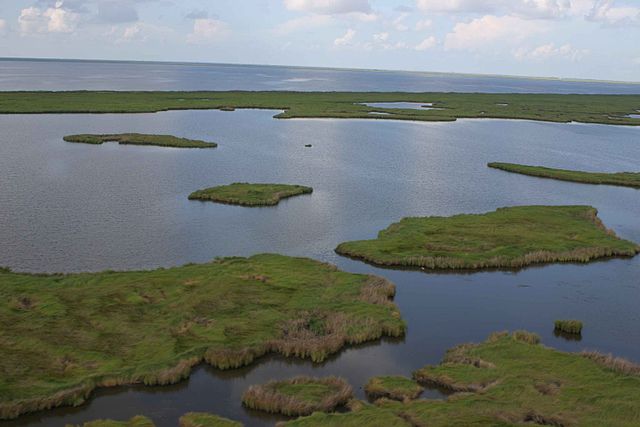 Image: By U.S. Fish & Wildlife Services (http://www.public-domain-image.com/) [Public domain], via Wikimedia Commons
 The Pacific Northwest in the United States has suffered a tough summer. A long drought and minimal snowpack has left the region parched, which in turn has affected amphibians due to a loss of mountain pond habitat. Scientists now worry that this summer’s severe conditions could be the new normal within just a few decades.
A study published in PLoS ONE used a new model that forecasts changes to different types of wetland ecosystems in the Pacific Northwest. The results showed that climate-induced reductions in snowpack, increased evaporation rates, long summer droughts and other factors will likely lead to the rapid drying or even complete loss of many ecologically important wetlands.
The team adapted methods that had originally been developed for forecasting the effects of climate change on mountain streams. Wetlands usually receive little attention since they are smaller and often out of sight. However, ponds and wetlands are globally important ecosystems that help store water and carbon, filter pollution, convert nutrients and provide food and habitat to a huge range of migratory and resident species. Their sheer numbers, which total in the tens of thousands across the region, make them ecologically significant.
Maureen Ryan, an author of the study and senior scientist with Conservation Science Partners, said: “It’s hard to truly quantify the effects of losing these ponds because they provide so many services and resources to so many species, including us. Many people have predicted that they are especially vulnerable to climate change. Our study shows that these concerns are warranted.”
Mountain ponds are oases in the otherwise harsh alpine environment. They are breeding grounds for frogs, toads, newts and salamanders, as well as watering holes for species ranging from shrews to mountain lions. They also provide food for birds, snakes and mammals that feed on the invertebrates and amphibians that breed in these high-altitude ponds.
“We’ve seen that the lack of winter snowpack and high summer temperatures have resulted in massive breeding failures and the death of some adult frogs,” said co-author Wendy Palen, an associate professor at Canada’s Simon Fraser University who has for many years studied mountain amphibians in the Pacific Northwest. “More years like 2015 do not bode well for the frogs.”
One species at risk is the Cascades frog, which is currently being evaluated for listing under the Endangered Species Act. This frog is particularly vulnerable because it is found only at high elevations in Washington, Oregon and California. The Cascades frog can live for more than 20 years and can survive under tens of feet of snow.
The maps that have been produced by the study can be used by land managers to prepare for climate change. The study’s authors are now working with North Cascades National Park, where the park biologists are using the wetlands projections to evaluate and update priorities for managing introduced fish and restoring natural alpine lake habitat.
No comments yet.