
Shift to Smaller Animals Predicted
As a result of the threats posed by human activity, scientists are predicting that there will be a shift towards smaller sized animals and birds, which could incur negative impacts for the long-term sustainability of ecology and evolution.
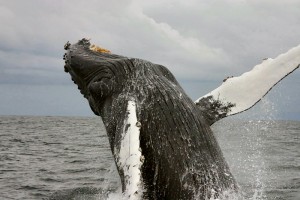
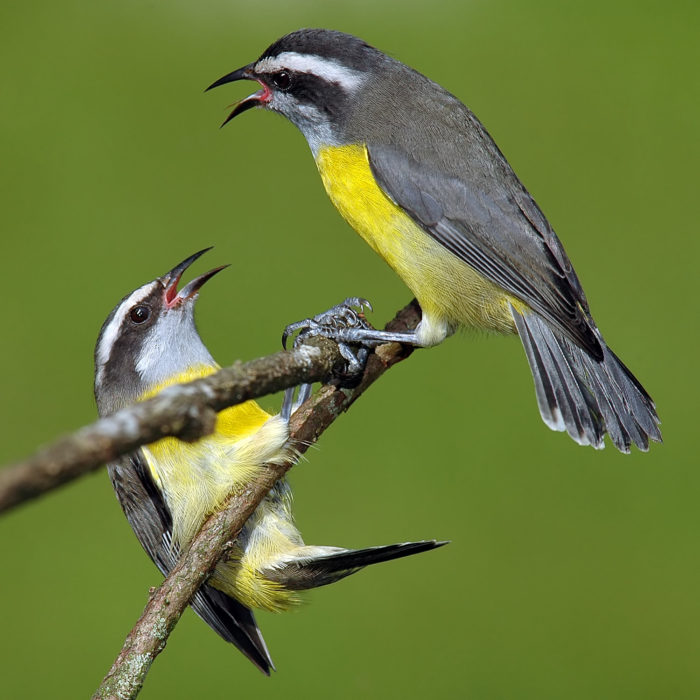 Image: Leon-bojarczuk - Flickr page [CC BY-SA 2.0 (https://creativecommons.org/licenses/by-sa/2.0)]
 Researchers at the University of Southampton have forecast a worldwide move towards smaller birds and mammals over the next 100 years as a result of ecological change, which could have negative impacts in the long-term. Their findings have been published in the journal Nature Communications.
In the future, small, fast-lived, highly-fertile, insect-eating animals, which can thrive in a wide-variety of habitats, will predominate. These ‘winners’ include rodents, such as dwarf gerbil, and songbirds, such as the white-browed sparrow-weaver. Less adaptable, slow-lived species, requiring specialist environmental conditions, will likely fall victim of extinction. These ‘losers’ include the tawny eagle and black rhinoceros.
The researchers predict the average (median) body mass of mammals specifically will collectively reduce by 25% over the next century. This decline represents a large, accelerated change when compared with the 14% body size reduction observed in species from 130,000 years ago (the last interglacial period) until today.
Rob Cooke, lead author on this work and a postgraduate researcher at the University of Southampton, says: “By far the biggest threat to birds and mammals is humankind – with habitats being destroyed due to our impact on the planet, such as deforestation, hunting, intensive farming, urbanisation and the effects of global warming. The substantial ‘downsizing’ of species which we forecast could incur further negative impacts for the long-term sustainability of ecology and evolution. This downsizing may be happening due to the effects of ecological change but, ironically, with the loss of species which perform unique functions within our global ecosystem, it could also end up as a driver of change too.”
The research team focussed on 15,484 living land mammals and birds and considered five characteristics that relate to the role of each species in nature: body mass, litter/clutch size, breadth of habitat, diet and length of time between generations. In addition, the researchers used the International Union for Conservation of Nature (IUCN) Red List of Threatened Species to determine which animals are most likely to become extinct in the next century. They used modern statistical tools to combine all this data to make their projections and evaluate the loss of biodiversity.
“We have demonstrated that the projected loss of mammals and birds will not be ecologically random – rather a selective process where certain creatures will be filtered out, depending on their traits and vulnerability to ecological change,” explains Felix Eigenbrod, professor at the University of Southampton.
Amanda Bates, Research Chair at Memorial University in Canada, says: “Extinctions were previously viewed as tragic, deterministic inevitabilities, but they can also be seen as opportunities for targeted conservation actions. As long as a species that is projected to become extinct persists, there is time for conservation action and we hope research such as ours can help guide this.”
The research team hope further studies can be carried out to look in more detail at the longer-term effect of species becoming extinct on habitats and ecosystems.
Sorry, comments are closed on this post