
Habitat Fragmentation Increases Mammalian Extinction Risk
A first-of-its-kind study has provided evidence on a global scale that habitat fragmentation, largely caused by human activities, contributes to the extinction risk for mammals.
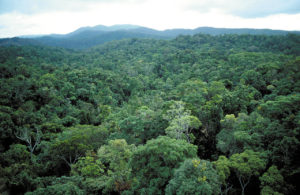
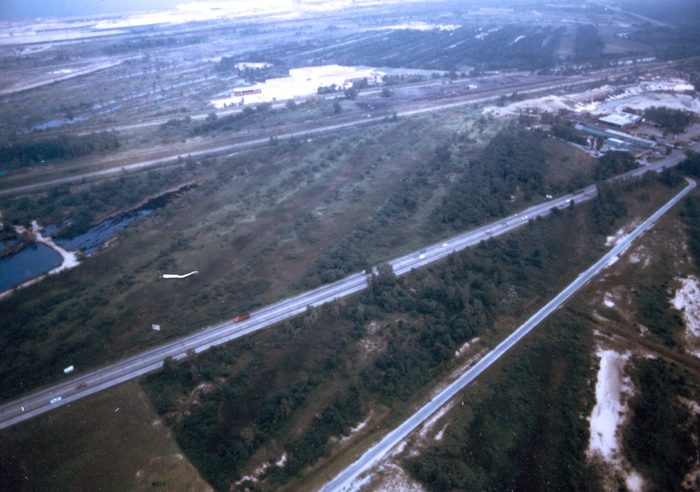 Image: USGS - Public Domain
 Habitat fragmentation and how it affects over 4,000 species of land-dwelling mammals has now been successfully measured. Although it seems obvious, scientists now have proof that species that experience more habitat fragmentation are at greater risk of extinction.
It has long been assumed that habitat fragmentation contributes to extinction risk for animals. But until now, it has not been measured for a major group of animals at a global scale. It is a first-of-its-kind study by an international team of scientists led by Colorado State University, published in Proceedings of the National Academy of Sciences. It states that the research has implications for assessing the threat of extinction for mammals and setting priorities for global mammal conservation.
“For the first time in Earth’s history, one species – Homo sapiens, or humans – dominates the globe,” said Kevin Crooks, the study’s lead author and a professor in Colorado State University’s Department of Fish, Wildlife, and Conservation Biology. “In contrast to prior eras, we travel and communicate across the entire planet. Unfortunately, the more ‘connected’ we become, non-human life with which we share this planet becomes increasingly disconnected, at their peril.”
The research team used high-resolution habitat-suitability models to measure the degree of fragmentation for the world’s mammals. They examined the relationship between fragmentation and extinction risk, as assessed by the IUCN. Additionally, they produced global maps, predicting key areas of intact high-quality habitat as well as hotspots of fragmentation for mammals. Habitat models demonstrate that most suitable environments for mammals are located outside of known protected areas.
Habitat fragmentation can be caused such as urban development and deforestation. It reduces the total amount of habitat available to wildlife, but simultaneously isolates the habitat that remains, preventing movement of animals in previously connected landscapes.
Previous research has shown that large carnivores – mountain lions and bobcats – decline, and at times disappear, in highly fragmented urban areas in the United States. Fragmentation also intensifies the effects of other agents of global environmental change, including limiting the ability of wildlife to shift locations in response to climate change.
“Habitat fragmentation needs to be addressed urgently, but it is also a manageable global conservation challenge,” Crooks said. “We hope that this research will provide critical guidance to conservation practitioners and policymakers setting strategic priorities for global mammal conservation. The findings of the study warrant intensified efforts to protect remnant habitat patches, as well as to restore connectivity to fragmented landscapes through conservation tools such as wildlife corridors and habitat linkages.”
No comments yet.