
Abrupt Land Change Impacts Local Biodiversity
Biodiversity across the globe could be in a worse state than previously thought as current biodiversity assessments fail to take into account the long-lasting impact of abrupt land changes.

A new study has shown that fewer species and fewer individuals are observed at sites that have been disturbed by an abrupt land change in past decades. The study was conducted by Dr Martin Jung, Senior Lecturer in Geography Dr Pedram Rowhani and Professor of Conservation Science Jörn Scharlemann, all at the University of Sussex. It was published recently in the journal Nature Communications.
The authors warn that areas subjected to deforestation or intensification of agriculture can take at least ten years to recover, with reductions in species richness and abundance.
With current biodiversity assessments failing to take into account the impacts of past land changes, the researchers believe that the natural world could be in a far worse state than currently thought.
Lead author, Dr Martin Jung said: “These findings show that recent abrupt land changes, like deforestation or intensification through agriculture, can cause even more impactful and long-lasting damage to biodiversity than previously thought. Our study shows that it can take at least ten or more years for areas which have undergone recent abrupt land changes to recover to levels comparable to undisturbed sites. This only strengthens the argument to limit the impacts of land change on biodiversity with immediate haste.”
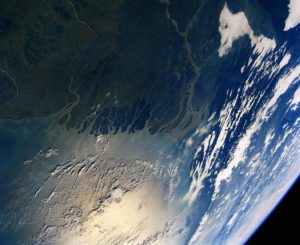
The study combined global data on biodiversity from the PREDICTS database, one of the largest databases of terrestrial plants, fungi and animals across the world, with quantitative estimates of abrupt land change detected using images from NASA’s Landsat satellites from 1982 to 2015.
Comparing numbers of plants, fungi and animals at 5,563 disturbed sites with those at 10,102 undisturbed sites across the world from Africa to Asia, the researchers found that biodiversity remains affected by a land change event for several years after it has occurred, due to a lag effect.
Species richness and abundance were found to be 4.2% and 2% lower, respectively, at sites where an abrupt land change had occurred.
In addition, the impacts on species were found to be greater if land changes had occurred more recently, and caused greater changes in vegetation cover. At sites that had land changes in the last five years, there were around 6.6% fewer species observed.
However, at sites where a land change had taken place 10 or more years ago, species richness and abundance were indistinguishable from sites without a past land change in the same period, indicating that biodiversity can recover after such disturbances.
Dr Jung explained: “For us, the results clearly indicate that regional and global biodiversity assessments need to consider looking back at the past in order to have more accurate results in the present. We’ve shown that remotely-sensed satellite data can assist in doing this in a robust way globally. Our framework can also be applied to habitat restoration and conservation prioritization assessments.”
Prof Jörn Scharlemann added: “Although the number of species and individuals appear to recover more than 10 years after a land change, we will still need to find out whether the original unique species recover or whether common widespread species, such as weeds, pigeons and rats, move into these disturbed areas.”
Sorry, comments are closed on this post