
Herbivores Most at Risk of Extinction
Despite the perception that predators are most at risk of extinction, a new study has revealed that it is actually herbivores that are more likely to go extinct. Currently over a quarter of the world’s herbivores are threatened.
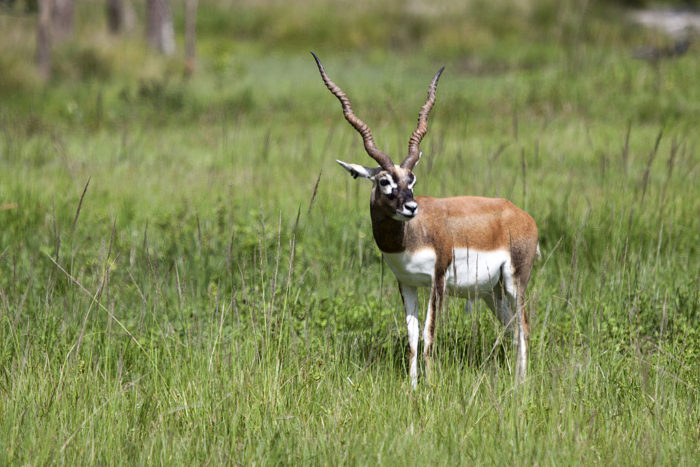 Image: TomFawls, CC BY-SA 3.0
 One million years ago, the extinction of large-bodied plant-eaters changed the trajectory of life on Earth. The disappearance of these large herbivores reshaped plant life, altered fire regimes across Earth’s landscapes, and modified biogeochemical cycling in such a way that Earth’s climate became slightly colder.
A new study published in Science Advances, suggests that modern-day megaherbivores (plant-eaters weighing more than 1000 kg) could soon suffer the same fate as their ancient ancestors, with unknown consequences for Earth and all of its inhabitants.
Armed with a dataset of the diets of over 24,500 mammals, birds, and reptiles, lead author Trisha Atwood and her team set out to answer the question “Are plant-eaters, meat-eaters, or animals who eat both plants and meat, at the greatest risk of extinction?” Their findings would challenge a two-decade-long perception that meat-eating predators were the most likely group to suffer in Earth’s six mass extinction.
The results indicate that with over a quarter of the world’s modern-day herbivores threatened with extinction, plant eaters have the highest representation of at-risk species in the present day. The study also highlights that this attack on herbivores is not a new phenomenon. Human activities have led to the disproportionate extinction of herbivores compared to predators since at least the late Pleistocene (11,000-50,000 years ago).
Atwood says that their results were shocking: “Our highly publicised and fraught relationship with predatory animals such as lions and wolves has led to the unfounded perception that we are losing predators more than any other trophic group.”
Using evidence-based science to challenge misconceptions like the one Atwood’s team uncovered is essential for getting society on the right track towards addressing future extinctions. Because a species’ role in its ecosystem is intricately linked to what it eats, understanding whether predators, herbivores, or omnivores are at the highest risk of extinction helps scientists and society understand what the potential consequences of losing those species are.
Already the consequences of declines in modern herbivores from land-use change and hunting have begun to echo those that occurred on Earth 1 million years ago; alterations to plant life, changes to fire regimes, and disruptions to nutrient cycling. This study highlights that we must redouble our efforts to strategically invest in conservation and management of herbivores to avoid future dramatic changes in the functions arising from animals at the base of global foodwebs.
Although the results of the study indicate that herbivores are the most at-risk group, it is not clear sailing for predators. The study also identified scavengers, which eat the remains of recently deceased animals (e.g. vultures) and animals that primarily eat fish, such as seabirds, as having a heightened risk of extinction.
“Our results enable us to identify specialised diets within the carnivores that are associated with higher extinction risk, and also identify the habitats these species live in. It would appear that seabirds across the globe suffer disproportionately high levels of extinction,” said co-author Edd Hammill.
To better inform conservation actions, the researchers are now wrestling to understand what it is about herbivores, scavengers, and piscivores (animals that consume fish) that make them more susceptible to extinction compared to other animals.

No comments yet.